
37 guided templates
Choose a template for what you want to make.
Start with a rough idea, a few notes, or something you saved. The template asks for the details, builds an initial Prompt Card, and confirms the direction before creating the result.
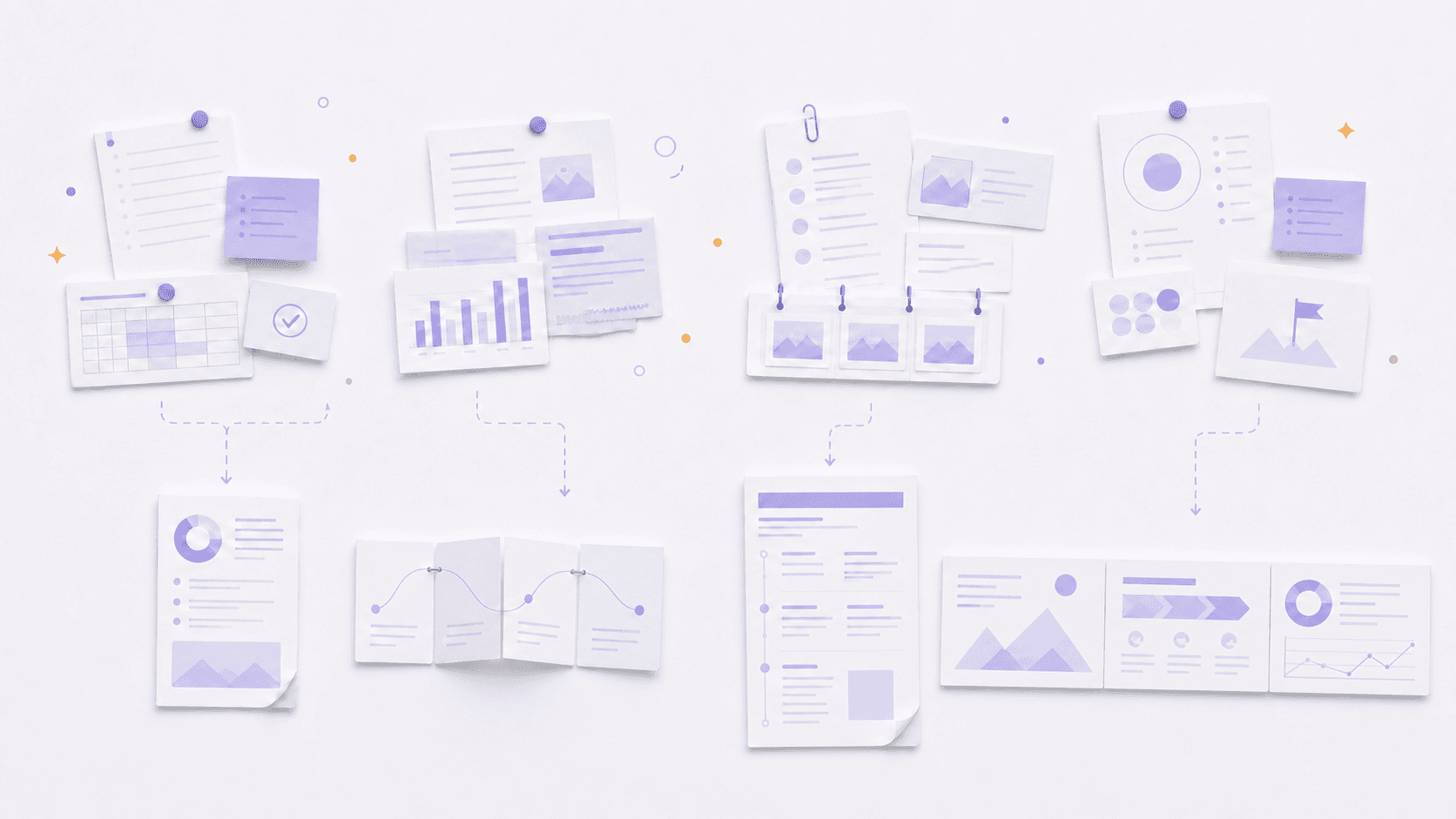
How guided templates work
A template asks the right questions.
Start with the task and the information you have. FormaLM uses each answer to build the prompt.
- 01
Choose the situation
Begin with the job: a guide, comparison, recap, explainer, or another concrete need.
- 02
Add what you know
Answer task-specific fields and attach the notes, links, images, or documents that matter.
- 03
Review the initial Prompt Card
The card keeps your goal and instructions in one place.
- 04
Confirm the remaining choices
Answer a few simple questions about the audience, focus, sources, and format.
Browse by category
Find the kind of template you need.
Choose the situation first. Then pick whether the result should be an infographic, carousel, web page, or video.
Template library
Find a useful starting point.
Filter the same 37 templates available in FormaLM by product category or output format.
37 templates
How-to guide
Explain a process in straightforward steps, with the details a beginner is likely to need.
Explain a concept
Make one idea easier to understand with a plain-language explanation and a relatable example.
Quick comparison
See how two options differ and which one better fits a particular need.
News analysis
Explain what changed in a news story, why it matters, and what may happen next.
Content summary
Pull the ideas and evidence worth keeping from a long article, report, PDF, or other source.
Concept breakdown
Show how the parts of a complex idea connect and what it means in practice.
Trip planner
Plan each day of a trip around your destination, dates, interests, and preferred pace.
Recommendations
Put together recommendations that suit a particular person, mood, or need.
Event timeline
Put scattered events in order so the sequence and turning points are easy to understand.
Learning plan
Make a learning goal manageable with a realistic schedule and a way to track progress.
Project recap
Turn project materials into a recap that makes the outcome and next steps easy to find.
Experience post
Share something you tried or lived through in a personal post that others can learn from.
Meeting notes
Make rough notes or a transcript easy to share, with decisions and next steps pulled out.
Media review
Turn your thoughts on a book, film, show, podcast, or game into a review with a clear point of view.
Personal story
Tell a personal story that moves naturally from what happened to what it meant to you.
Work decision
Compare work options, make the trade-offs visible, and recommend what to do next.
Buying guide
Compare a purchase against your needs and budget before you choose.
Habit plan
Fit a small, sustainable habit into the routine you already have.
Knowledge cards
Explain something you know in a short set of cards that is easy to follow and remember.
Screenshot notes
Organize saved screenshots into notes you can search, review, and act on later.
Travel guide
Share a destination with practical tips, favorite places, and a route others can use.
Quick take
Share a timely opinion in a short post with enough context to stand on its own.
Sell an item
Write an honest, easy-to-scan listing that gives buyers the details they need.
Cover & caption
Pair a short cover line with a caption for a photo, update, launch, or announcement.
Weekly update
Sum up the week's progress in an update people can read quickly and act on.
Idea brief
Give an early idea enough shape for someone else to understand it and respond.
Data summary
Find the changes and patterns in a report or dataset that deserve attention.
Work guide
Write down a repeatable process so a teammate can follow it without extra help.
Document summary
Condense a long document without losing the decisions or details you may need later.
Weekly routine
Arrange the things you need to do into a week that still leaves room to rest.
Monthly review
Look back on the month before deciding what deserves your attention next.
Event invite
Invite people with the details they need and a clear sense of why the event is worth their time.
Group trip
Turn everyone's availability and preferences into a trip plan the group can discuss.
Group choice
Help a group compare options and reach a decision that feels fair.
Personal message
Write a thoughtful note for the moments when finding the right words is hard.
Brand story
Tell a brand's story through the people, choices, or moments that shaped it.
FAQ answers
Answer recurring questions in a format people can scan and reuse.
Ways to use a template
Make the material easier to finish.
These guides show how to turn notes, research, and saved material into a clear result.
Content creation
Shape a post, story, review, or guide from material you already have.
Knowledge education
Make research or notes easier to understand and remember.
Work docs
Turn a meeting, plan, or decision into something you can use later.
Product explainer
Show how something works, what it includes, and how it compares.
Sales conversion
Give someone enough context to compare options and decide.
Brand marketing
Keep the voice and visual direction consistent across what you share.
Make one now
Choose a template. Answer only what you know.
FormaLM builds the prompt from your answers and creates a result you can review and refine.