
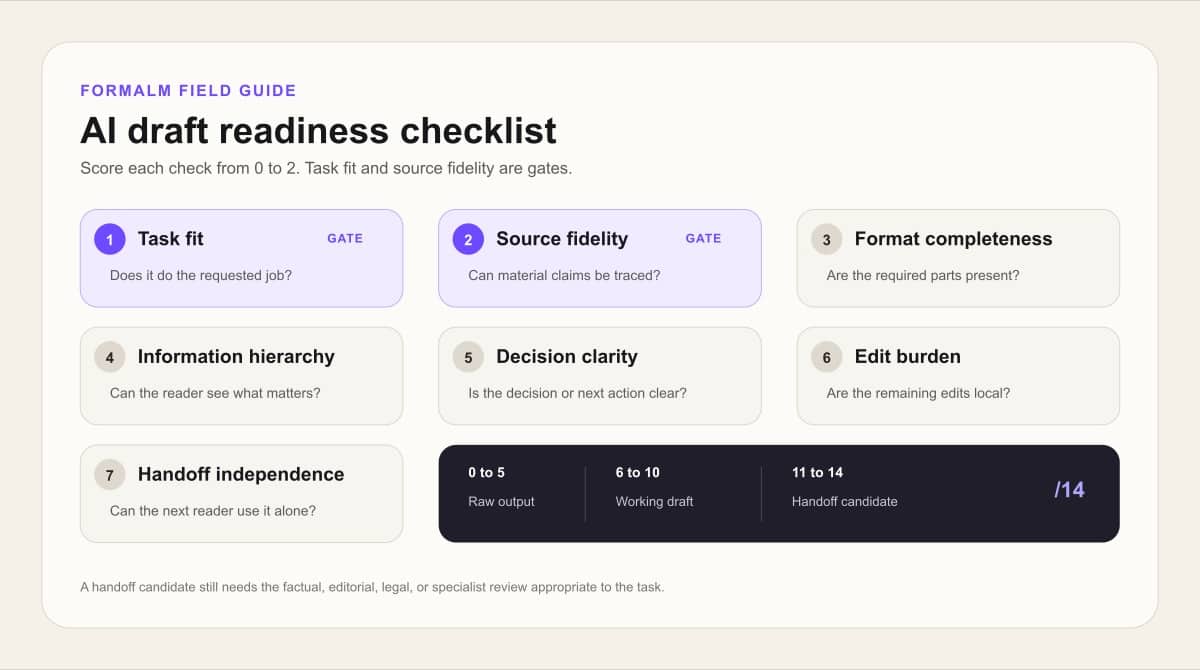
AI Draft Checklist: 7 Tests Before You Hand It Off
A fluent AI draft can still be unusable.
FormaLM Journal
Essays, playbooks, and comparisons on how rough intent becomes a clearer structure, a stronger handoff, and a format-ready output.
A starting point for thinking about structure, format, and finished work.
A fluent AI draft can still be unusable.
Recent guides and essays on turning rough material into usable work.
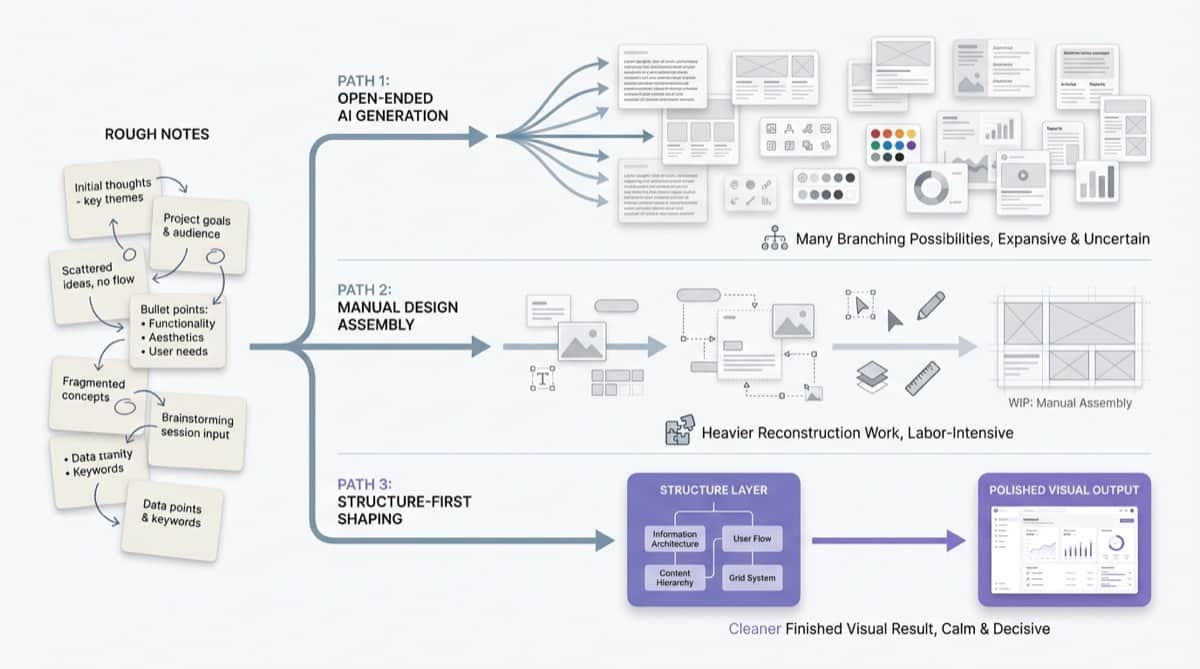
People looking for an AI tool for notes visuals usually already have the raw material: meeting notes, research fragments, a workshop dump, a rough brief, or a page of useful bullets. They need a faster route to something they can confidently send, publish, present, or place in a document.
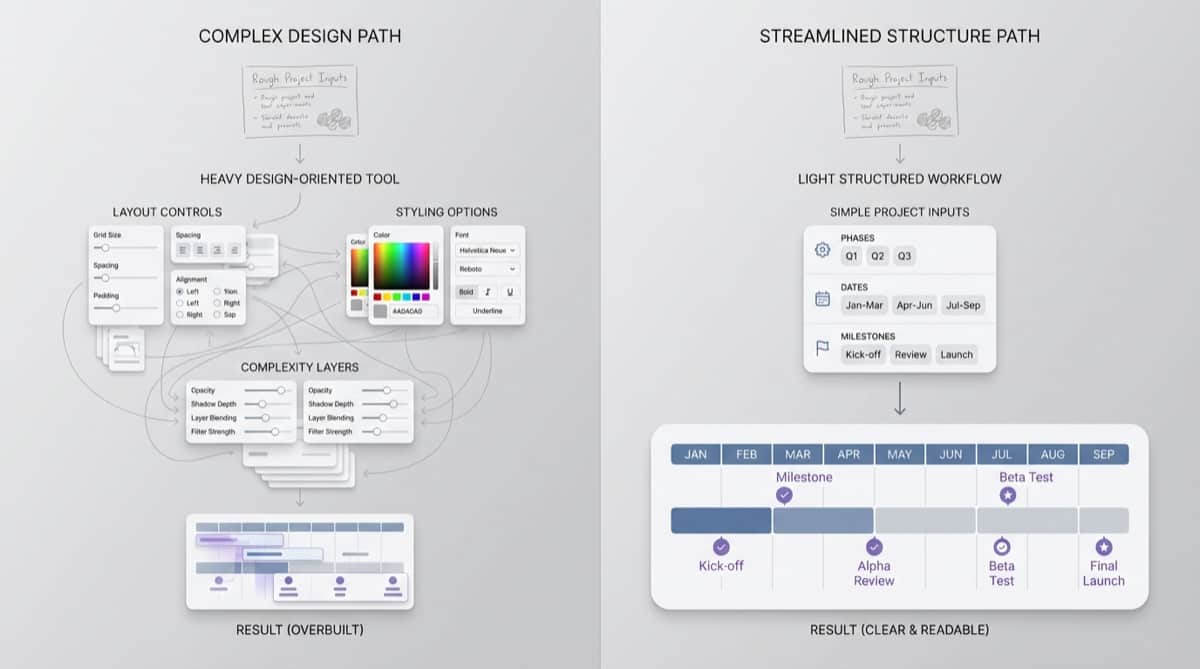
Teams searching for a timeline maker often need a fast way to turn project dates, milestones, dependencies, and updates into something they can present, share, and revise. A fully expressive design surface may add work without solving that structural problem.
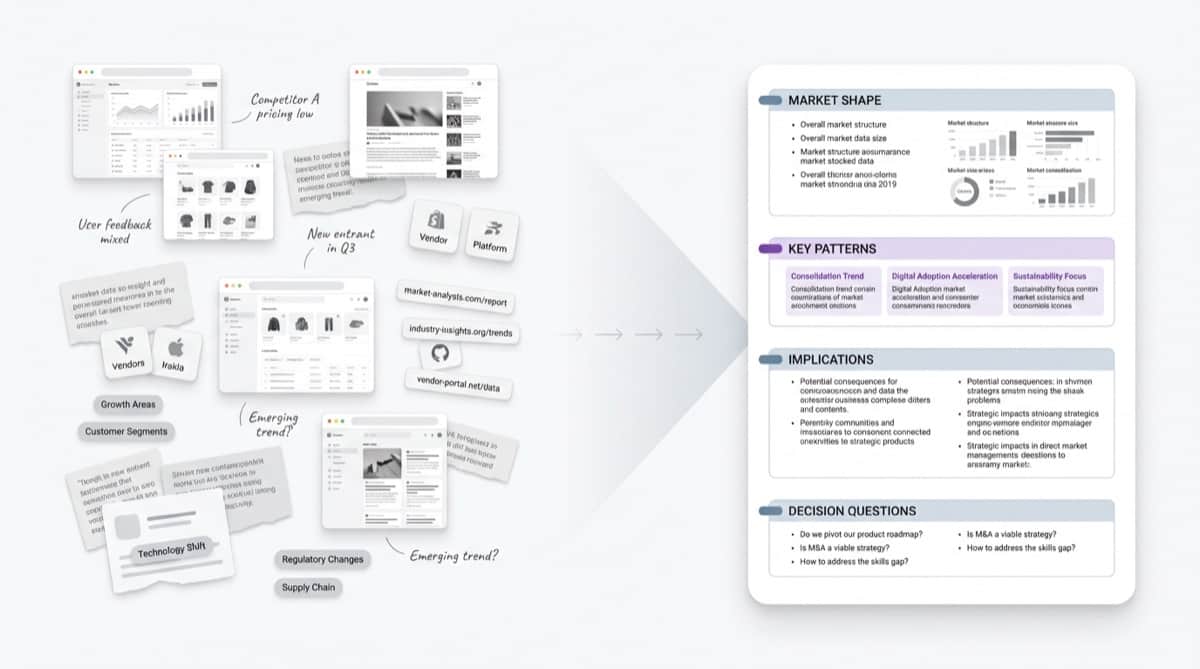
A market scan helps a team get oriented before making a decision. Its value comes from compressing noisy inputs into something people can judge, forward, and discuss without reconstructing the background.
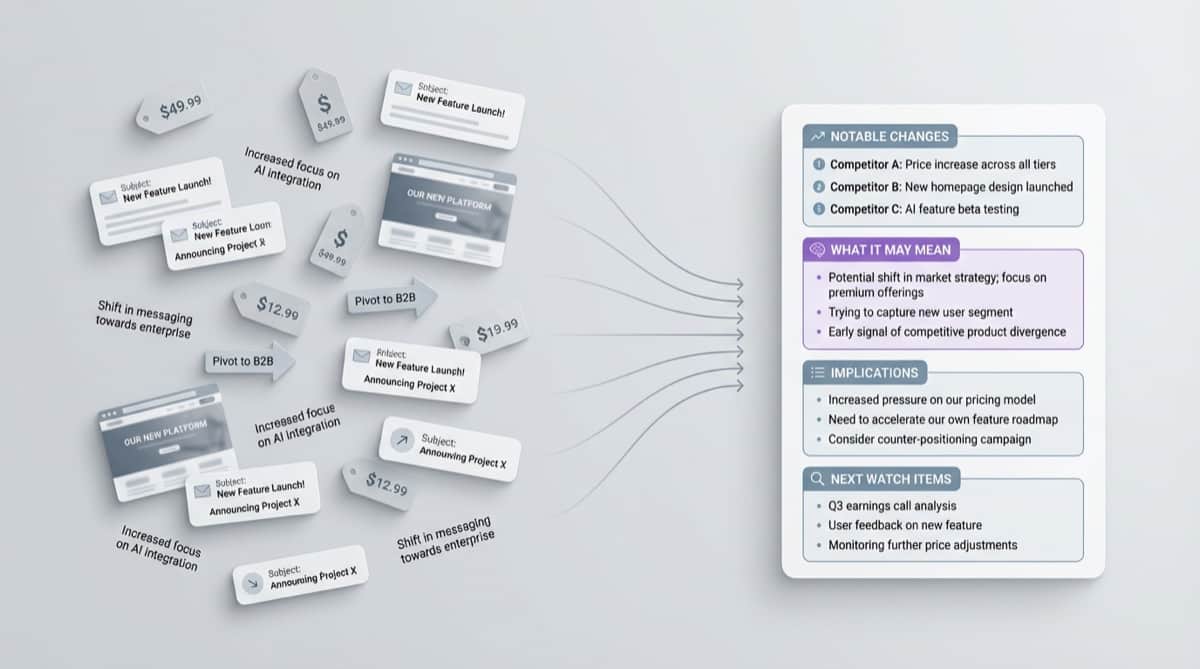
Competitor updates need more structure than a pile of links, screenshots, and passing observations, but less weight than a full research workflow.
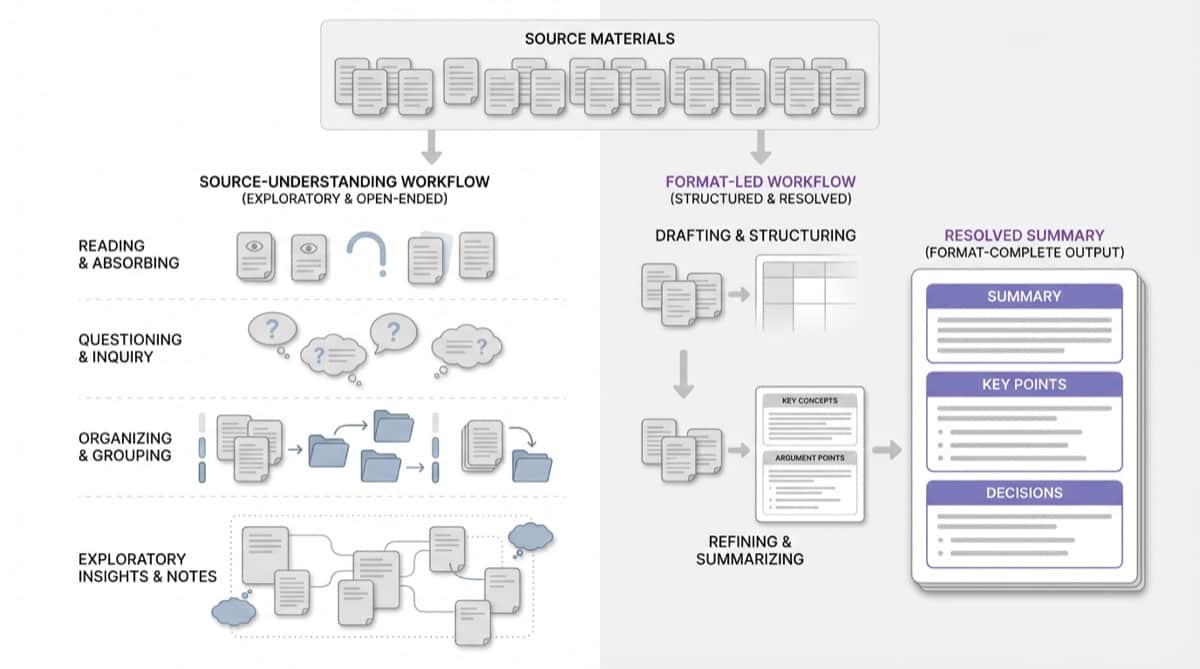
People looking for a NotebookLM alternative may be trying to solve an adjacent workflow rather than replace the product directly.
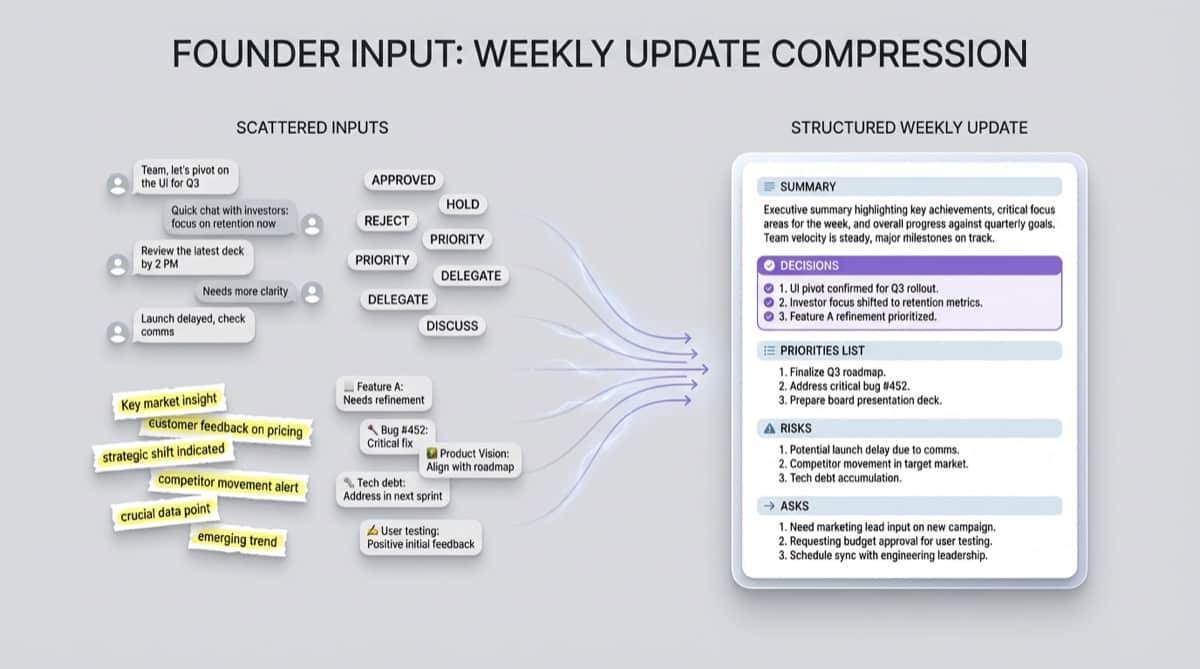
A product call changes a priority. A customer conversation sharpens a concern. A note from a late-night read suggests a new direction. A short Slack message carries more judgment than it looks like. By the end of the week, the founder has real signal, but the team still needs a version that is coherent enough to align around.
Start with the kind of problem you are trying to solve.
See how the ideas in the journal show up across FormaLM's formats, templates, and workflow.