
Introduction
A brief is a handoff document shaped around what another person needs in order to act, respond, or make a decision. Build that structure before polishing the notes.
A brief is not cleaned-up notes
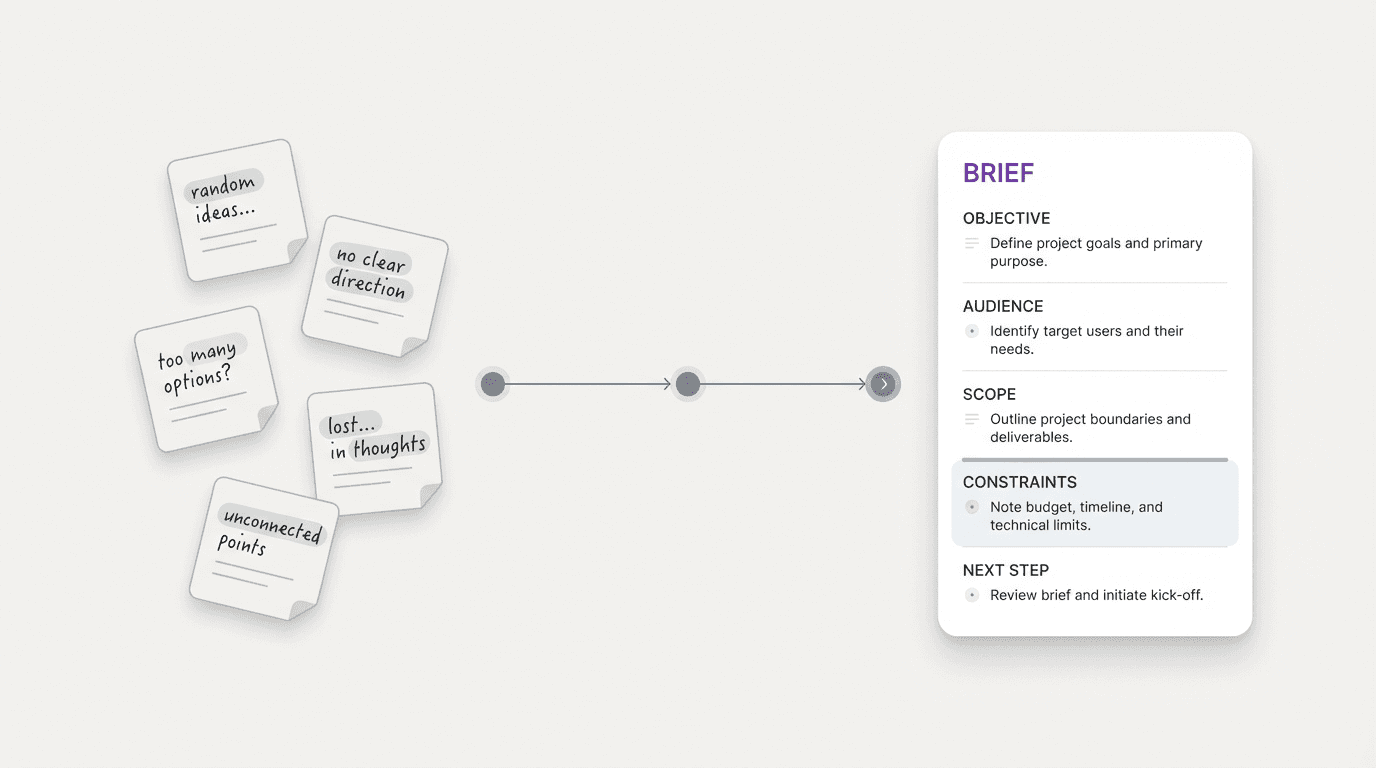
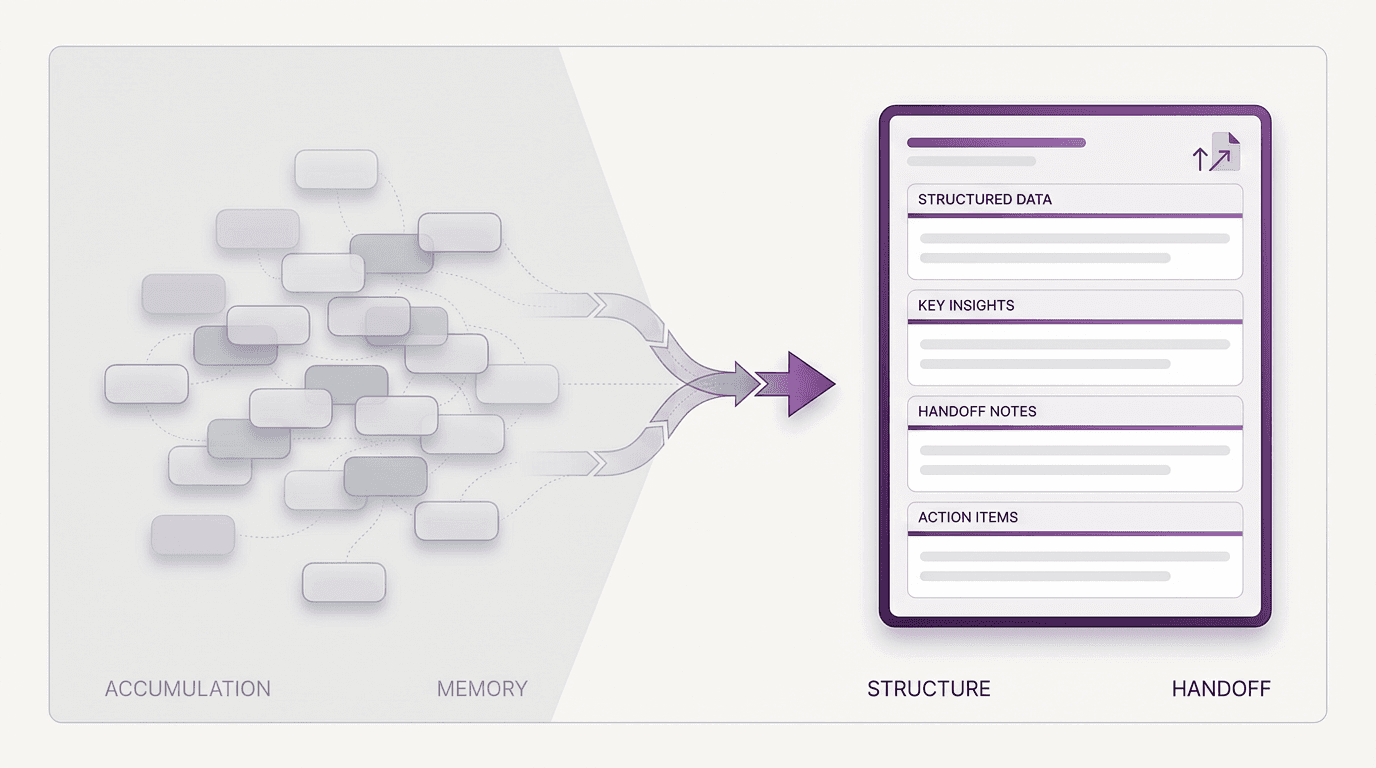
Notes are written for memory. A brief is written for handoff.
That sounds obvious, but it changes how you handle the material. Notes are allowed to be partial, chronological, repetitive, and private. They only need to make sense to the person who captured them. A brief has a different standard. It has to make sense to the next reader without relying on the context still sitting in your head.
Many rough note sets feel fuller than they are. They contain detail but do not show what matters or clarify the task.
If you try to preserve the notes too literally, the brief inherits the same problem. It becomes readable only if the reader already knows the backstory.
So the first principle is simple: do not ask how to make the notes nicer. Ask what the brief needs to make clear.
Start with the handoff, not the pile
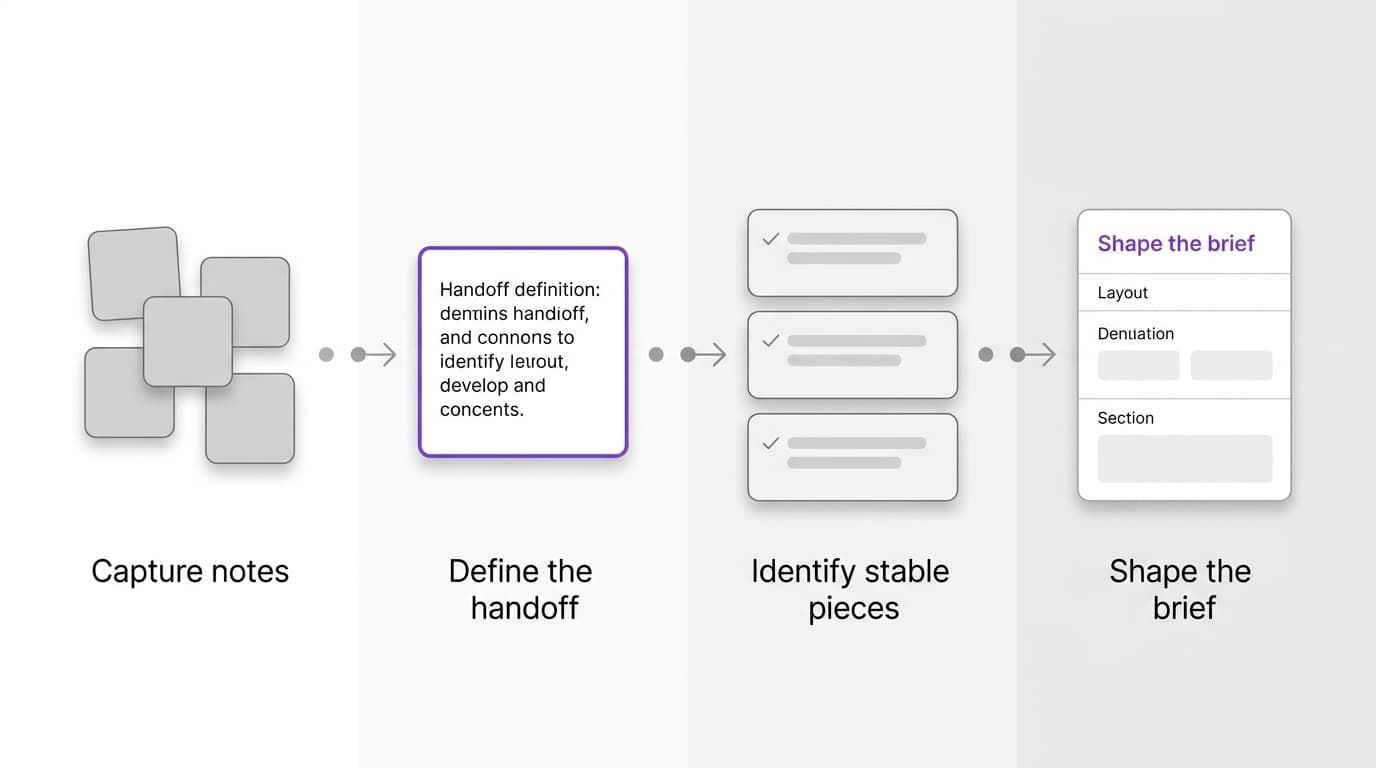
Before you touch the notes, define the handoff.
Who is the brief for? What do they need from it? Are they making a decision, creating an asset, reviewing a direction, writing something, or aligning a team? Until that is explicit, it is difficult to know what deserves space in the final document.
People often lose time by staying inside the material instead of defining the job it needs to support.
If a designer is receiving the brief, they may need audience, objective, deliverable, constraints, and visual references. If a marketer is receiving it, they may need channel, message, timing, approvals, and success criteria. If a founder is reviewing it, they may need tradeoffs, scope, and decision points more than background detail.
The same note pile can produce different briefs depending on the handoff.
Start the brief with one sentence that defines the job of the document. For example:
"This brief should help a teammate create a launch page draft for a new feature aimed at existing customers."
Now the notes have a filter. Material that supports that outcome stays. Material that does not can move to the edge.
Find the stable pieces in the notes
Once the handoff is clear, look for the pieces in your notes that are already stable.
Most rough note sets contain a few elements that are more decided than the rest. The objective may already be clear. The audience may be obvious. A deadline, channel, or constraint may already be fixed. There may be one phrase that captures the core message better than everything around it.
These stable pieces matter because they should become the structure of the brief.
In practice, that usually means pulling out the following:
- objective
- audience
- scope
- constraints
- message or key idea
- deliverable
- next step or decision needed
Not every brief needs all of them, but most useful briefs include some version of this set.
The important thing is to promote them early. Do not leave them buried in bullets and then try to summarize later. Once the stable parts are visible, the rest of the notes become easier to place.
At this point, the work becomes less about editing and more about deciding what belongs.
Promote those pieces into brief sections
The fastest way to turn notes into a brief is to stop thinking in bullets and start thinking in sections.
Once you have identified the stable pieces, turn them into headings. A basic brief might look like this:
- Objective
- Audience
- What needs to be made
- Core message
- Constraints
- Open questions
- Next step
This does two things immediately.
First, it gives the document a clear structure. You know what belongs in each section and when the brief has enough information.
Second, it lowers the rewriting load. Instead of rewriting everything from scratch, you can sort the existing material into a clearer shape. Many note fragments already contain useful language. They just live in the wrong place.
A good brief often comes from promotion and sorting, not from wholesale rewriting.
That distinction matters. People spend too much energy improving sentences that should have been reclassified instead.
Cut what belongs in background, not in the brief
One reason briefs become bloated is that the author feels responsible for preserving the entire reasoning trail.
But a shareable brief is not an archive.
The next reader usually does not need every meeting tangent, every speculative idea, or every false start that appeared in the notes. They need enough context to understand the job, the boundaries, and the target outcome.
When you turn notes into a brief, some material should move into a lighter background section, and some should disappear completely.
Useful questions to ask:
- Does this help the next person act?
- Does this clarify a decision or a constraint?
- Would the brief fail without this detail?
- Is this context, or is it just residue from the note-taking process?
That last question is often the most useful. Notes preserve residue because capture is cheap. Briefs need stronger selection.
Cutting is not a loss of fidelity. It is part of making the document usable.
Rewrite only where the handoff would fail
This step keeps the process efficient.
You do need rewriting, but much less than most people assume.
Once the structure is in place, only rewrite the parts that would fail in handoff. That usually means:
- shorthand that another reader would not understand
- contradictions across notes
- missing transitions between key points
- vague statements with no operational meaning
- implied assumptions that need to be made explicit
Everything else can often be tightened lightly rather than rewritten from zero.
Clear headings do much of the work. A rough sentence under the right heading is often more useful than a polished sentence in a shapeless document because the reader can see what the information is for.
Usefulness is a better standard for a brief than smooth prose alone.
Check whether the brief can stand on its own
Before you consider the brief finished, run one final test: could the next person use this without you in the room?
If the answer is no, the document is still too close to notes.
A usable brief should let another person understand:
- what the work is
- why it matters
- who it is for
- what constraints shape it
- what success looks like
- what happens next
If any of those still rely on context outside the page, add what is missing.
Shareable means the brief survives handoff.
Format matters because the right structure exposes missing pieces faster than a blank page. It shows whether the document is ready for use instead of merely long enough.
Structure is what makes notes shareable
Start by deciding what the document needs to do, then shape the notes around that job. With the handoff clear, promote the stable pieces, cut the excess, and rewrite only what would fail the next reader.
Notes are good at capture. Briefs are good at coordination.
Structure connects the two.